Middle-aged individuals and health-conscious seniors often confront the realities of aging: declining mobility, cognitive slips, muscle loss, and heightened risks of heart disease, diabetes, and frailty. These challenges threaten independence and vitality, but recent science reveals pathways to healthy aging that extend healthspan—the years lived actively and disease-free.
Stanford Medicine clinicians emphasize that the 60s and 70s are ideal for adopting habits preserving mobility, sharpness, and autonomy. Their five key practices—strength training, balance exercises, optimized nutrition, cognitive engagement, and preventive screenings—yield profound benefits even for previously inactive individuals Five healthy habits for successfully aging.
A comprehensive systematic review of 35 RCTs involving 25,000 participants quantifies gains: exercise cuts frailty risk by 33% (RR=0.67), Mediterranean diets reduce cognitive decline (OR=0.72), and social networks lower depression by 30% (RR=0.70) Evidence-Based Pathways to Healthy Aging.
NIH guidelines reinforce this, advocating 150 weekly minutes of moderate activity like brisk walking, alongside nutrient-rich foods and stress management to boost circulation, muscle strength, and mental resilience Live long, be well.
2025 research spotlights low-cost longevity tips: curbing sedentary time adds years, while vitamin D and meditation slow biological aging Healthline; Fox News.
This series equips you with actionable, science-backed strategies on nutrition, mobility exercises, and preventive care for successful aging. Embrace these to overcome decline and thrive.
Nutrition Strategies for Longevity: Mediterranean Diet and Beyond
Nutrition plays a pivotal role in healthy aging, especially as metabolic needs shift with age. Older adults require more protein to combat sarcopenia—muscle loss that accelerates frailty. Stanford experts recommend 1.0 to 1.3 grams per kilogram of body weight daily, equating to 68-88 grams for a 150-pound person. Sources like 3-4 ounce chicken breast, Greek yogurt, eggs, tuna, or tofu at each meal meet this target, preserving strength and independence Five healthy habits for successfully aging.
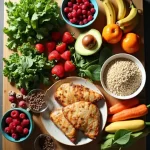
The Mediterranean diet consistently tops rankings for longevity benefits. Rich in anti-inflammatory foods—fruits, vegetables, whole grains, fish, olive oil, nuts—it slashes heart disease, diabetes, and cognitive decline risks. Research shows it reduces cardiovascular events (RR=0.78), cognitive impairment (OR=0.72), and boosts muscle mass (SMD=0.45) Evidence-Based Pathways to Healthy Aging.
Fill half your plate with produce, choose lean proteins, whole grains over refined carbs, and healthy fats like avocados. Minimize ultra-processed items laden with salt, sugar, and saturated fats, which fuel inflammation linked to Alzheimer’s and heart issues Five healthy habits for successfully aging; Live long, be well.
Antioxidants from berries, leafy greens, and seafood counter oxidative stress, supporting brain health. NIH advises nutrient-rich choices: seafood, nuts, seeds, low-fat meats, while capping added sugars and fats. Five daily fruit/vegetable servings cut chronic disease odds Live long, be well.
2025 insights affirm Mediterranean patterns with omega-3-rich fish enhance heart and cognition, aiding weight control for extended healthspan Healthline. Longevity expert Eric Topol endorses this ‘eat the rainbow’ approach, cutting cholesterol and glucose issues 7 simple science-backed rules.
Practical integration:
- Breakfast: Yogurt parfait with nuts, berries.
- Lunch: Salmon salad with olive oil vinaigrette.
- Dinner: Veggie stir-fry, quinoa, legumes.
These evidence-based shifts foster healthy aging, vitality, and disease resistance without gimmicks.
Mobility and Exercise for Active Aging: Strength, Balance, and Cardio
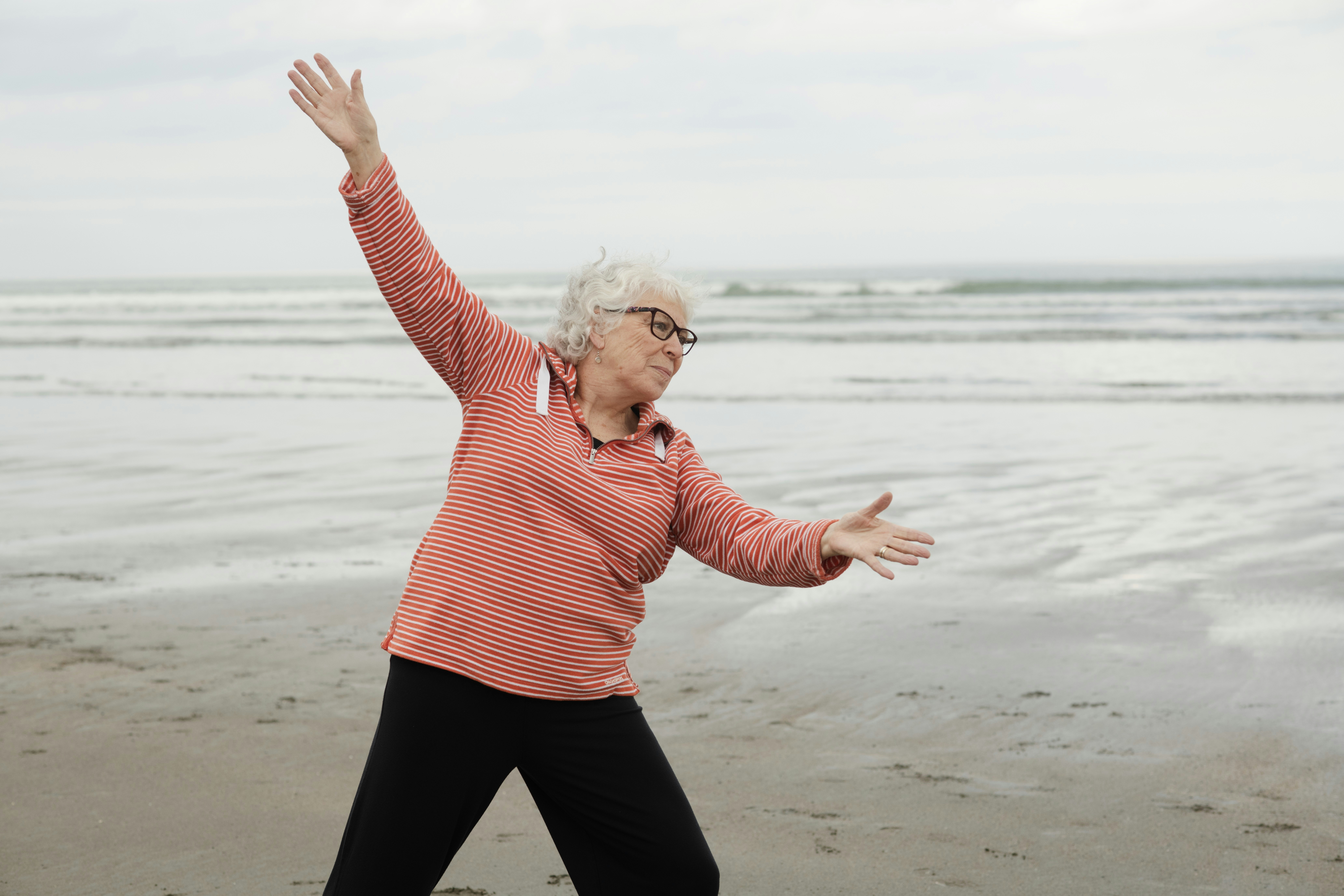
Maintaining mobility is essential for healthy aging, enabling independence and reducing fall risks that lead to injury and frailty. Even previously sedentary individuals gain benefits from targeted exercise, as Stanford experts note: strength, balance, and aerobic activities preserve function into the 80s Five healthy habits for successfully aging.
Strength training combats muscle weakness. U.S. guidelines recommend muscle-strengthening twice weekly. Start with chair sit-to-stands: lower/rise 10-15 times, progressing to no hands. Wall push-ups, resistance bands, or lighter weights to failure build power for groceries and stability. Systematic reviews show resistance boosts muscle strength/bone density (SMD=0.52) and cuts frailty risk 33% (RR=0.67) Evidence-Based Pathways to Healthy Aging.
Balance training prevents falls, a top independence threat. Practice single-leg stands (hold counter, 10-20 seconds per leg, 5-10 reps) or corner stands (back to corner, eyes closed). One study links 10-second one-leg balance to better survival. Pair with tooth-brushing. NYU research reveals aerobic exercise triggers dopamine release, enhancing mobility Exercise might help improve mobility.
Cardio elevates VO2 max by 3.6 mL/kg/min, improving heart/lung function Evidence-Based Pathways to Healthy Aging. Aim for 150 moderate minutes weekly—brisk walking to 7,000 steps daily, in bouts. NIH endorses hiking, swimming alongside strength/balance Live long, be well.
Weekly routine:
- Mon/Wed/Fri: 20-min strength + balance.
- Tue/Thu/Sat: 30-min brisk walk.
- Sun: Rest or yoga.
Mobility exercises sustain joint health, fostering active healthy aging Mobility exercises.
Sources
- https://med.stanford.edu/news/insights/2026/01/healthy-habits-for-successful-aging-60s-and-70s.html
- https://pmc.ncbi.nlm.nih.gov/articles/PMC12674651/
- https://magazine.medlineplus.gov/article/live-long-be-well-science-based-tips-for-healthy-aging
- https://www.foxnews.com/health/4-anti-aging-approaches-revealed-2025-may-help-americans-live-longer
- https://blog.a4m.com/2025-top-wellness-trends-longevity/
- https://www.healthline.com/health-news/healthy-ways-to-improve-longevity
- https://nyulangone.org/news/exercise-might-help-improve-mobility-during-aging
- https://apnews.com/article/mobility-exercises-health-fitness-aging-c0403522aed1c7a589c6972549a4584e
- https://www.nationalgeographic.com/health/article/longevity-aging-tips-science
- https://www.nytimes.com/2025/04/10/well/longevity-low-cost-tips.html