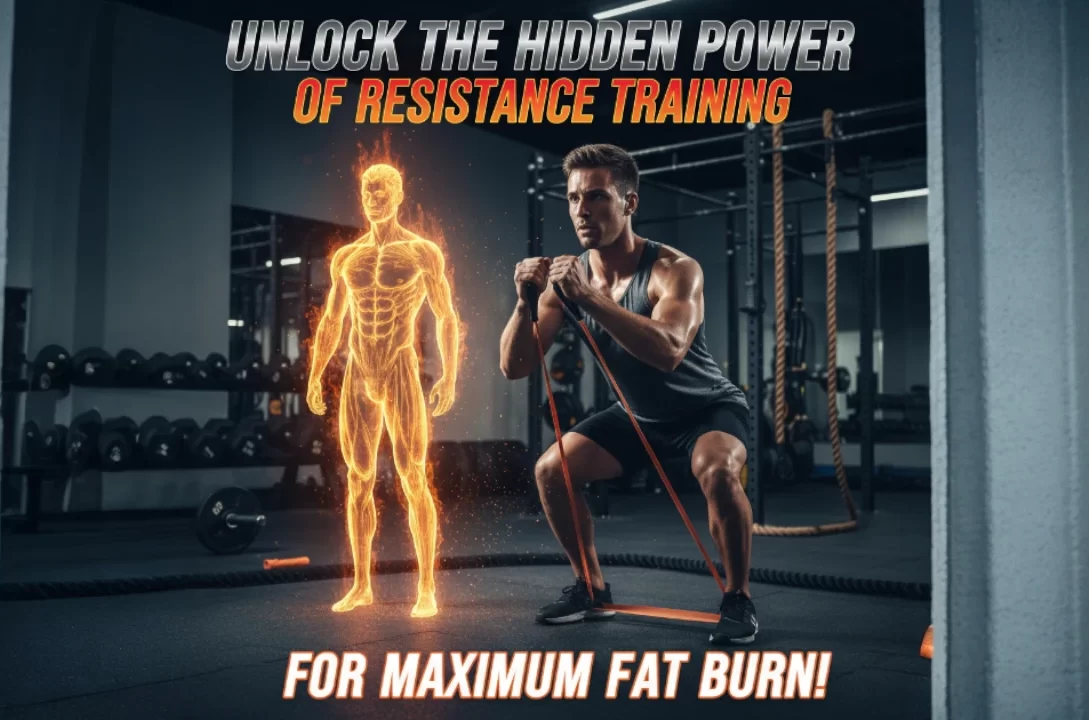
Most people chasing fat loss hit the treadmill, believing endless cardio is the fastest way to burn calories. While cardio has its place, research shows resistance training delivers superior long-term fat burn by building lean muscle, boosting metabolism, and transforming your body composition.
If you want a leaner, stronger physique and sustainable fat loss, resistance training is your ultimate ally. Let’s uncover how it works, why it outshines traditional cardio, and how you can harness its hidden power for maximum results.
What is Resistance Training and Why It Works
Resistance training, also known as strength training, involves exercises where your muscles contract against an external force—such as dumbbells, resistance bands, or even your own body weight.
Here’s why it’s a fat-burning powerhouse:
- Increases muscle mass → more muscle burns more calories at rest.
- Triggers the afterburn effect (EPOC) → body continues burning calories hours after a workout.
- Improves insulin sensitivity → better energy use and reduced fat storage.
- Strengthens bones and joints → supports long-term health while burning fat.
The Science Behind Muscle and Metabolism
One pound of muscle burns three times more calories at rest than fat tissue. That means the more lean muscle you carry, the higher your resting metabolic rate (RMR) becomes.
This is where resistance training beats cardio: while cardio burns calories during the activity, resistance training keeps your metabolism elevated long after you’ve finished your workout. This is called Excess Post-Exercise Oxygen Consumption (EPOC)—a metabolic boost that continues for up to 48 hours.
Why Resistance Training Outperforms Cardio for Fat Loss
Both cardio and strength training burn calories, but the quality of fat loss differs.
- Cardio: Burns calories during exercise, but doesn’t build muscle.
- Resistance training: Burns calories, builds muscle, and reshapes your body.
When people rely only on cardio, they often lose muscle mass along with fat. This slows metabolism, making it harder to keep fat off. Resistance training ensures you burn fat, not muscle, while sculpting a toned, defined physique.
Types of Resistance Training That Burn Fat Fast
You don’t need to live in the gym to unlock resistance training benefits. A variety of methods help accelerate fat burn:
Bodyweight Training
Push-ups, squats, lunges, and planks require no equipment but deliver powerful fat-burning effects by engaging multiple muscles at once.
Free Weights
Dumbbells and barbells allow progressive overload, forcing your muscles to adapt and grow stronger—while torching calories.
Resistance Bands
Portable and versatile, bands provide tension throughout the entire movement, keeping muscles under constant stress.
Machines
Weight machines guide form and isolate muscle groups, ideal for beginners or for targeting weak spots.
Circuit Training
Combines strength moves in quick succession, elevating your heart rate and amplifying calorie burn.
Best Resistance Training Exercises for Fat Loss
Not all exercises torch fat equally. Compound movements (exercises that engage multiple muscle groups) maximize calorie burn and efficiency.
Top fat-burning resistance moves include:
- Squats
- Deadlifts
- Bench Press
- Pull-Ups
- Overhead Press
- Kettlebell Swings
- Rows
These exercises recruit large muscle groups, stimulate metabolism, and enhance total-body fat loss.
How to Structure a Resistance Training Program for Fat Burn
To maximize fat burn, you need more than random workouts—you need structure.
Here’s a simple weekly framework:
- 3–4 resistance training sessions per week (full-body or split routines).
- 8–12 reps per set to build muscle and burn fat simultaneously.
- Progressive overload → gradually increase weight, reps, or sets.
- Rest periods of 30–60 seconds for higher calorie burn.
Sample split:
- Day 1: Upper body (push)
- Day 2: Lower body
- Day 3: Rest or cardio
- Day 4: Upper body (pull)
- Day 5: Full-body circuit
The Role of Nutrition in Resistance Training and Fat Burn
You can’t out-train a poor diet. To maximize fat loss, align your nutrition with your training.
Key strategies:
- Eat enough protein → supports muscle repair and growth (aim for 0.8–1g per pound of body weight).
- Balance macronutrients → include healthy fats (avocado, olive oil, salmon) and complex carbs (oats, quinoa, sweet potatoes).
- Stay in a slight calorie deficit → burn fat without sacrificing muscle.
- Hydrate consistently → water supports energy, performance, and fat metabolism.
Common Mistakes to Avoid in Resistance Training for Fat Loss
Many people miss out on results because of simple errors. Watch out for these pitfalls:
- Skipping progressive overload → lifting the same weight forever stalls fat loss.
- Overtraining → excessive workouts lead to burnout and injury.
- Ignoring nutrition → training without proper fuel slows fat loss.
- Neglecting rest → recovery is when your body burns fat and builds muscle.
The Mental Benefits: Why Resistance Training Keeps You Consistent
Resistance training isn’t just about aesthetics—it’s about building resilience. Lifting weights:
- Boosts confidence as you see strength and body composition improve.
- Reduces stress by lowering cortisol levels.
- Improves focus and mental toughness, fueling consistency.
A consistent mindset keeps fat loss sustainable—not just a short-term fix.
FAQs About Resistance Training and Fat Burn
Does resistance training burn fat directly?
Yes, resistance training burns fat both during and after workouts through increased calorie expenditure and elevated metabolism.
Can beginners use resistance training for fat loss?
Absolutely. Start with bodyweight and lighter weights, then gradually increase intensity for sustainable fat burn.
How long does it take to see fat loss results?
Most people notice visible changes in 6–8 weeks with consistent training and nutrition.
Should I combine cardio with resistance training?
Yes. A mix of strength and moderate cardio delivers optimal fat-burning and cardiovascular health.
Do women get bulky from resistance training?
No. Women naturally have lower testosterone, so resistance training tones and defines muscles without bulk.
Conclusion: Unlock Your Fat-Burning Potential
Resistance training isn’t just about getting stronger—it’s about unlocking a powerful fat-burning engine inside your body. By building lean muscle, boosting metabolism, and reshaping your physique, resistance training delivers sustainable fat loss that cardio alone can’t match.
If you want to torch fat, gain strength, and feel unstoppable, make resistance training your foundation. Pair it with smart nutrition, proper recovery, and a focused plan, and you’ll unlock the hidden power of your body—one rep at a time.
👉 Ready to transform? Start lifting today and experience how resistance training reshapes not just your body, but your entire lifestyle.
🔗 Helpful Resources: