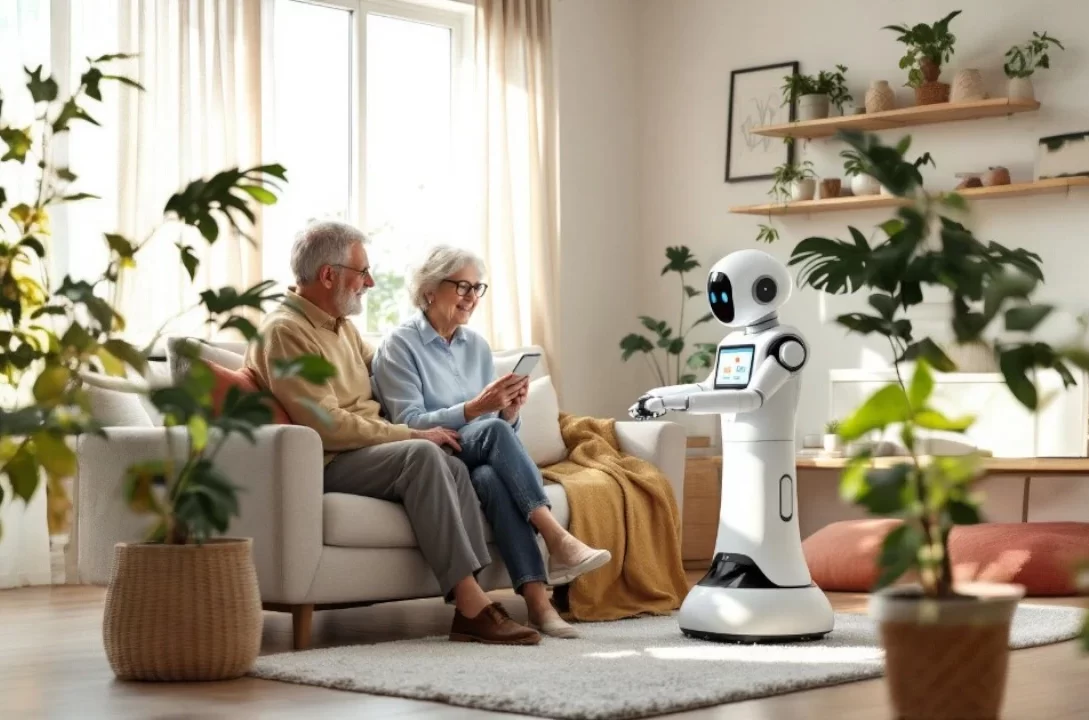
AI and robotics are transforming healthcare by improving diagnosis accuracy, enhancing treatments, and streamlining patient care. From surgical robots to AI-powered disease detection, the future of healthcare is already here—and evolving fast.
Introduction
The healthcare industry is undergoing a technological revolution. Once considered futuristic, artificial intelligence (AI) and robotics are now actively reshaping how we diagnose illnesses, treat patients, and even prevent diseases.
From AI algorithms that can detect cancer earlier than human doctors to surgical robots performing procedures with unparalleled precision, the future of healthcare isn’t decades away—it’s happening now.
In this article, we’ll explore how AI and robotics are revolutionizing healthcare, the challenges ahead, and what this means for patients and professionals worldwide.
How AI is Changing Healthcare
AI in healthcare is all about data-driven decision-making. Using machine learning, AI systems can analyze massive amounts of patient data, medical records, and research far faster than humans.
Early Disease Detection
- AI-powered imaging tools can detect cancers, heart disease, and neurological disorders earlier than traditional methods.
- Google’s DeepMind AI has achieved breakthrough accuracy in diagnosing over 50 eye diseases from retinal scans.
Personalized Treatment Plans
- AI algorithms analyze patient genetics, lifestyle, and medical history to create customized care plans.
- Predictive analytics help doctors choose the most effective treatments with fewer side effects.
Virtual Health Assistants
- AI chatbots and voice assistants provide 24/7 medical advice and appointment scheduling.
- Patients can access symptom checkers, medication reminders, and follow-up care through their smartphones.
The Role of Robotics in Modern Medicine
While AI focuses on analysis and decision-making, robotics brings precision and efficiency to physical medical tasks.
Surgical Robots
- The da Vinci Surgical System allows surgeons to perform minimally invasive operations with enhanced dexterity.
- Robotic arms reduce incision size, speed up recovery, and minimize risks.
Rehabilitation Robots
- Assistive robots help patients regain mobility after strokes or injuries.
- Devices like exoskeletons enable paraplegic patients to walk again.
Hospital Automation
- Delivery robots transport medicines, lab samples, and meals inside hospitals, reducing staff workload.
- Disinfection robots use UV light to sterilize rooms, improving infection control.
AI + Robotics: A Powerful Partnership
When AI intelligence is combined with robotic precision, the results are game-changing:
- AI-driven surgical robots that adapt in real time during procedures.
- Smart prosthetics that learn patient movement patterns and respond instantly.
- Automated diagnostics labs where robots perform tests and AI interprets results within minutes.
Benefits of AI and Robotics in Healthcare
- Faster diagnoses → Improved survival rates
- Minimally invasive surgeries → Shorter recovery times
- Reduced human error → Increased patient safety
- Personalized care → Better treatment outcomes
- 24/7 healthcare access → No geographical limits
Challenges and Ethical Concerns
While the potential is enormous, there are hurdles to overcome:
Data Privacy
- Patient data must be protected from cyber threats.
- Stronger encryption and regulations like HIPAA are critical.
Cost and Accessibility
- High-tech systems can be expensive for smaller hospitals.
- Widespread adoption requires cost-effective solutions.
Job Displacement Fears
- Automation may replace some administrative tasks, but will also create new roles in tech-assisted care.
Ethical Decision-Making
- How much should AI influence life-or-death medical decisions?
- Clear guidelines and human oversight are essential.
Real-World Examples of AI and Robotics in Healthcare
- IBM Watson Health – Assists oncologists by analyzing patient data and recommending treatments.
- da Vinci Surgical System – Used in over 8.5 million surgeries worldwide.
- Gaumard HAL – A lifelike patient robot for medical training simulations.
- Butterfly iQ+ – An AI-powered handheld ultrasound device that works with smartphones.
The Future Outlook: What’s Next?
The next wave of healthcare innovation could include:
- Nanorobots delivering targeted drug treatments at the cellular level.
- Fully autonomous surgical systems for remote operations.
- AI health prediction tools capable of spotting potential illnesses years in advance.
With AI and robotics advancing rapidly, universal, affordable, and precise healthcare is closer than ever.
Internal Link Suggestions:
- Link to a post on The Role of Technology in Modern Medicine.
- Link to an article on Telemedicine and Beyond: What’s Next in Healthcare Evolution.
External Sources:
FAQs
Will robots replace doctors?
No—robots and AI will assist doctors, not replace them, allowing more focus on patient care.
Is AI in healthcare safe?
Yes, when regulated and used with proper oversight, AI can improve accuracy and safety.
Can AI diagnose better than humans?
In some cases, yes—especially in imaging-based fields—but human expertise remains essential.
How soon will AI and robotics be everywhere in hospitals?
Adoption is growing, but full integration may take another 5–10 years.
What are the biggest risks of AI in healthcare?
Data privacy breaches, biased algorithms, and over-reliance without human checks.
Conclusion
The future of healthcare is unfolding right before our eyes. AI and robotics are no longer distant dreams—they’re saving lives today. By blending data-driven intelligence with mechanical precision, these technologies promise a future where healthcare is faster, safer, and more personalized.
The future isn’t just coming—it’s already in the operating room, the clinic, and even your phone. The question is: are we ready to embrace it?