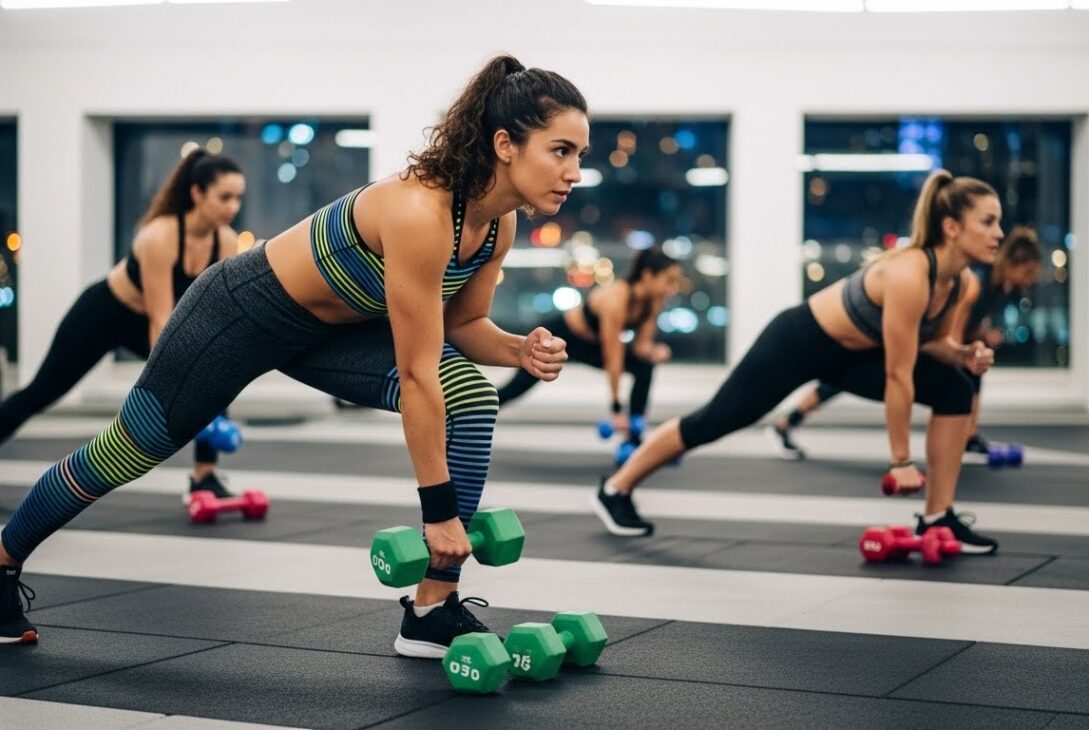
Strength training is no longer just for bodybuilders—it’s a core component of modern fitness trends. Experts now emphasize building lean muscle to:
- Boost metabolism and calorie burn
- Improve bone density and joint health
- Enhance functional strength for daily activities
- Support long-term cardiovascular and mental health
Why it matters: Modern fitness isn’t just about aesthetics; it’s about building sustainable strength, energy, and resilience.
Trend 1: Functional Strength Training
Functional training focuses on movements that mimic everyday activities, enhancing mobility, balance, and stability.
Examples:
- Squats and lunges for leg strength
- Deadlifts and kettlebell swings for core stability
- Push-ups and rows for upper body strength
Pro Insight: Functional training improves performance in sports, reduces injury risk, and supports daily life efficiency.
Trend 2: High-Intensity Interval Training (HIIT) with Weights
Combining strength and cardio through HIIT is redefining fitness trends. Short bursts of high-intensity exercise followed by rest improve:
- Muscle strength and endurance
- Cardiovascular health
- Fat loss and metabolic efficiency
Example: Circuit training using dumbbells, kettlebells, and bodyweight exercises for 20–30 minutes provides full-body conditioning.
Trend 3: Tech-Driven Fitness Tracking
Modern strength training leverages technology for precision and results tracking. Wearables, apps, and smart gym equipment track:
- Heart rate and recovery
- Reps, sets, and resistance levels
- Progress over time
Why it works: Data-driven workouts ensure efficiency, reduce overtraining, and motivate consistency.
Trend 4: Personalized Training Programs
Fitness trends are moving toward customized routines based on goals, body type, and lifestyle. Trainers and AI-powered apps create tailored strength programs to optimize:
- Muscle growth and toning
- Fat loss and metabolic boost
- Endurance and flexibility
Pro Tip: Personalized plans reduce plateaus and help achieve results faster than generic programs.
Trend 5: Home-Based Strength Training
Convenience and accessibility are reshaping fitness trends. Home gyms and minimal equipment workouts are popular due to:
- Time efficiency for busy schedules
- Reduced gym memberships costs
- Flexible, adaptable workouts
Examples: Resistance bands, dumbbells, and bodyweight exercises provide effective strength training anywhere.
Trend 6: Recovery and Mobility Integration
Modern strength training emphasizes recovery, stretching, and mobility as essential components.
Doctor-Recommended Practices:
- Foam rolling and dynamic stretching
- Yoga or Pilates sessions
- Adequate sleep and hydration
Impact: Proper recovery prevents injuries, enhances performance, and supports long-term fitness adherence.
Trend 7: Strength Training for All Ages
Strength workouts are now designed for all age groups, emphasizing lifelong fitness.
Key Insights:
- Older adults: resistance training preserves muscle mass and bone density
- Young adults: builds functional strength and prevents injuries
- Everyone benefits from improved posture, balance, and metabolic health
Trend 8: Combining Mindset with Physical Training
Modern fitness integrates mental and emotional strength. Techniques include:
- Visualization during strength exercises
- Goal setting and progress tracking
- Mindfulness to improve focus and reduce stress
Pro Insight: Mental resilience complements physical strength, enhancing workout effectiveness and lifestyle sustainability.
Frequently Asked Questions (FAQs)
Is strength training suitable for beginners?
Yes. Beginners should start with bodyweight exercises and light resistance, gradually increasing intensity.
How often should I include strength training in my routine?
Experts recommend 2–4 sessions per week, depending on goals and recovery needs.
Can strength training improve cardiovascular health?
Absolutely. Compound movements and circuit training boost heart rate and improve endurance.
Do I need a gym to build strength?
No. Bodyweight, resistance bands, and home equipment can deliver effective results.
How important is recovery in strength training?
Recovery is crucial. Proper rest, sleep, and mobility work prevent injury and maximize gains.
Conclusion
Fitness and strength training are redefining modern fitness trends by combining traditional exercises with functional movements, tech-driven tracking, personalized programs, and recovery strategies. By integrating these approaches into your routine, you can build strength, enhance performance, prevent injuries, and achieve long-term health goals. Strength training is no longer optional—it’s essential for a fit, resilient, and modern lifestyle.
Internal Link Suggestions:
- “Beginner’s Guide to Strength Training”
- “Top HIIT Workouts for Maximum Results”
- “Functional Fitness Tips for Everyday Life”
External Authoritative Sources:
- American Council on Exercise – Strength Training Benefits
- Mayo Clinic – Strength Training Basics
- Harvard Health – The Importance of Strength Training