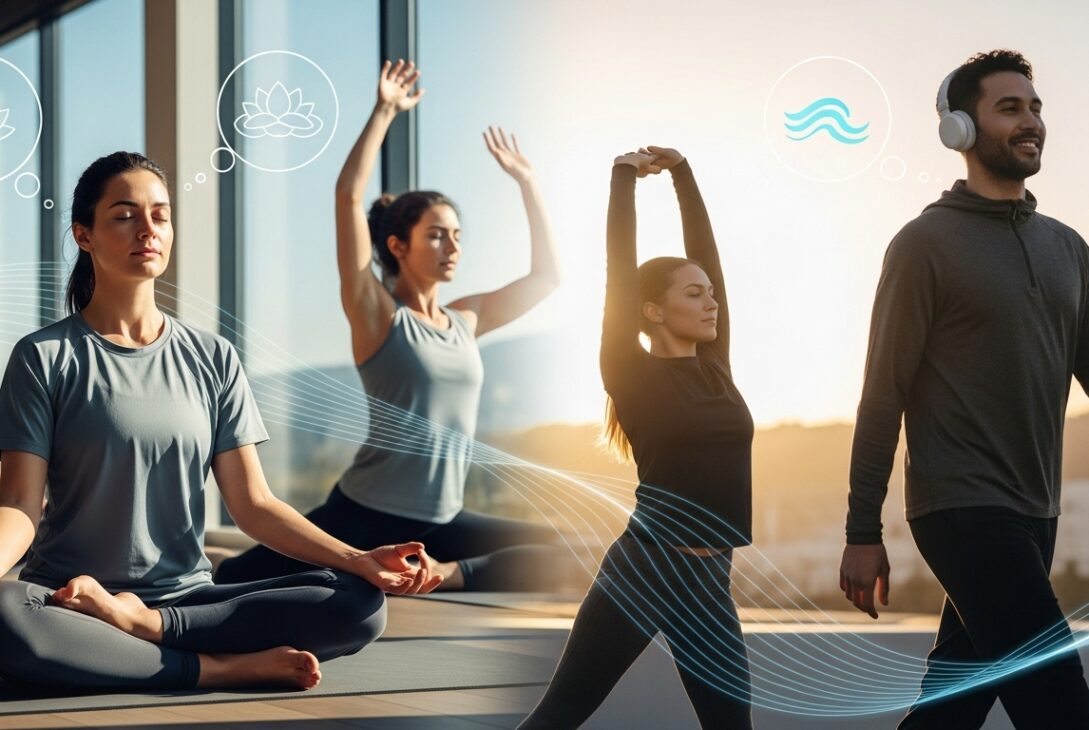
Mental health and wellness are redefining modern fitness by shifting the focus from appearance to holistic well-being. Today’s fitness trends emphasize stress relief, emotional balance, mindful movement, and sustainable routines that support both body and mind. This approach leads to healthier habits, better performance, and long-term lifestyle changes.
Understanding the Shift: Why Mental Health Now Drives Fitness Trends
Over the past decade, the fitness industry has undergone a major transformation.
People are no longer asking:
“How can I get abs fast?”
They are asking:
“How can I feel better, reduce stress, and improve my mental health?”
This shift is being driven by factors like:
- Rising stress in daily life
- Increased awareness of anxiety & depression
- Long work hours and digital burnout
- More research linking exercise with mental well-being
- The global movement toward holistic living
- The desire for sustainable, enjoyable fitness habits
Fitness is no longer viewed as punishment…
It’s seen as therapy, self-care, and emotional nourishment.
The Rise of Mind-Body Fitness: How Workouts Are Becoming More Holistic
Mental health-focused fitness trends now blend mindful movement with physical performance. The body and mind are treated as one unit—not separate systems.
Key mind-body fitness movements include:
Yoga for Mental Balance
Yoga improves:
- Stress management
- Emotional awareness
- Mindfulness
- Breath control
- Mental clarity
- Inner calm
More studios now offer trauma-sensitive, healing, and restorative yoga focused directly on mental wellness.
Pilates for Focus & Core Stability
Pilates enhances concentration and body awareness, reducing anxiety through controlled breathing and mindful movement.
Meditation-Infused Workouts
HIIT, strength training, and even running sessions now include:
- Guided breathing
- Mindful cooldowns
- Visualization techniques
- Stress-release routines
This creates deeper emotional benefits beyond physical results.
Why Mental Health Has Become a Fitness Priority
Science now proves what many have felt all along—exercise deeply impacts mental well-being.
Physical activity boosts mental health by:
- Increasing serotonin, dopamine & endorphins
- Reducing stress hormones like cortisol
- Enhancing sleep quality
- Improving cognitive function
- Building emotional resilience
- Supporting long-term happiness
People exercise not just to look good but to feel calm, confident, and centered.
How Gyms & Fitness Brands Are Adapting to Mental Wellness Trends
The fitness world is changing fast.
Brands are expanding from physical workouts to mental health-centric experiences.
Examples include:
Mindful Fitness Classes
Gyms now offer classes blending:
- Meditation
- Light stretching
- Music therapy
- Breathwork
- Slow-flow movements
Wellness Coaching
Personal trainers are becoming certified in:
- Behavioral psychology
- Stress management
- Sleep coaching
- Wellness counseling
Holistic Programs
Programs include:
- Recovery sessions
- Mental reset days
- Emotional wellness workshops
Fitness is becoming a full-circle lifestyle—not a one-hour workout.
Mental Health Benefits of Modern Holistic Fitness
People who follow mental health–centered fitness programs experience:
Reduced Anxiety & Stress
Mindful exercise activates the parasympathetic nervous system, lowering stress.
Better Emotional Regulation
Movement helps regulate emotions and reduce feelings of overwhelm.
Boosted Confidence & Self-Esteem
Focusing on progress—not perfection—creates a healthier body image.
Improved Focus & Productivity
Regular movement enhances cognitive performance and energy levels.
Sustainable Long-Term Habits
Holistic fitness removes pressure, making workouts more enjoyable and consistent.
The Role of Technology in Mental Wellness Fitness Trends
Tech is pushing the mental-health fitness revolution even further.
Apps Leading the Change
Wellness apps now include:
- Guided meditation
- Stress tracking
- Emotion journaling
- Sleep monitoring
- Recovery coaching
Apps like Calm, Headspace, and Nike Training Club promote emotional well-being alongside physical fitness.
Wearables for Mental Health
Fitness trackers now measure:
- Stress levels
- Heart rate variability
- Sleep cycles
- Mood trends
This helps users adjust workouts based on emotional and mental needs.
Virtual Wellness Communities
People are joining online groups for:
- Support
- Motivation
- Accountability
- Mental wellness discussions
Fitness is becoming more communal, compassionate, and emotionally supportive.
Recovery Is Now a Mental Health Priority
Modern fitness trends recognize that recovery is as important as training.
Popular Recovery Practices Include:
- Breathwork
- Cold therapy
- Sound healing
- Massage therapy
- Foam rolling
- Stretch therapy
- Meditation
- Aromatherapy
These practices help calm the mind, reduce fatigue, and improve sleep.
How Nutrition Supports Mental Wellness Fitness
What you eat shapes how you feel.
New trends emphasize mental wellness nutrition by focusing on:
Brain-Boosting Foods:
- Omega-3 rich fish
- Nuts & seeds
- Leafy greens
- Blueberries
- Probiotic-rich foods
- Green tea
- Dark chocolate
Foods That Reduce Stress:
- Magnesium-rich vegetables
- Herbal teas
- Whole grains
- Lean proteins
Gut Health for Mental Clarity
A healthy gut improves mood, reduces anxiety, and stabilizes emotional balance.
Practical Tips to Improve Mental Health Through Modern Fitness
Here are simple, actionable tips readers can apply today:
✔ Choose workouts that feel good
Not just ones that burn calories.
✔ Add mindful warm-ups
Spend 2 minutes breathing before starting.
✔ Focus on progress, not perfection
Celebrate consistency.
✔ Prioritize recovery
Treat rest as part of the fitness plan.
✔ Mix mental & physical training
Add meditation, breathwork, or journaling.
✔ Move daily—even if only for 10 minutes
Consistency > intensity.
✔ Set emotional goals, not just physical ones
“How do I want to feel today?”
Internal Link Suggestions (Based on Common Niches)
You may link to:
- “Best Holistic Health Tips for Beginners”
- “Top Recovery & Injury Prevention Methods”
- “How Group Fitness Improves Motivation”
- “Nutrition for Performance & Wellness Guide”
External Authoritative Sources
Link to:
- Harvard Health
- Mayo Clinic
- American Psychological Association
- National Institute of Mental Health (NIMH)
These boost E-E-A-T & search rankings.
FAQs
What is mental wellness fitness?
It’s a fitness approach focused on emotional well-being, mindfulness, stress relief, and holistic body-mind balance.
How does exercise improve mental health?
It boosts mood-regulating hormones, reduces stress, improves sleep, and enhances confidence.
Which workouts are best for mental wellness?
Yoga, Pilates, walking, dance classes, strength training, and mindful movement sessions.
Can fitness reduce anxiety and depression?
Yes—consistent exercise lowers anxiety, improves serotonin levels, and supports emotional resilience.
How often should I train for better mental health?
Aim for 30 minutes of movement daily, mixing physical and mindful exercises.
Conclusion: The Future of Fitness Is Mental Wellness
Modern fitness is no longer defined by weights or cardio alone.
It’s defined by well-being, emotional balance, and long-term self-care.
Today’s fitness enthusiasts want:
✨ Less pressure
✨ More mindfulness
✨ Better mental health
✨ Sustainable routines
✨ A balanced lifestyle
The future of fitness is holistic, mindful, and emotionally empowering.
And those who embrace this shift will experience not only physical transformation but a deeper, more fulfilling sense of well-being.